
'/%3E%3Cpath%20d='m454%20250-4%204-4-4c-3%203-9%205-9%205l2-5q-9%205-10%203c-1-1%2010-12%2012-26%200-1%203-18-8-13-2%201-4-5%200-7%203-2%2010-1%2011%200q1-2%203-2c2%200%2011%201%2014%206%202%205%202%2014%202%2015q0%2015%208%2027c-1%201-8-2-8-2v3s-7-2-9-4m-12-32c4%2014-9%2031-11%2033%2011%200%2012-10%2015-24l1%201c-2%2011-5%2022-8%2025l7-4%203-22h1l-3%2022%203%203%203-3-1-21h1l1%2021%208%203c-5-8-6-25-6-23h1c2%2012%203%2022%2012%2022-3-3-8-16-7-25q0-12-2-15-6-3-10%202-2%202-5-1c-2-2-1-2-6-4q-7-2-6%205s9-3%2013%205zm7-8q-3%201-1%202%203%200%201-2'/%3E%3C/g%3E%3C/svg%3E)
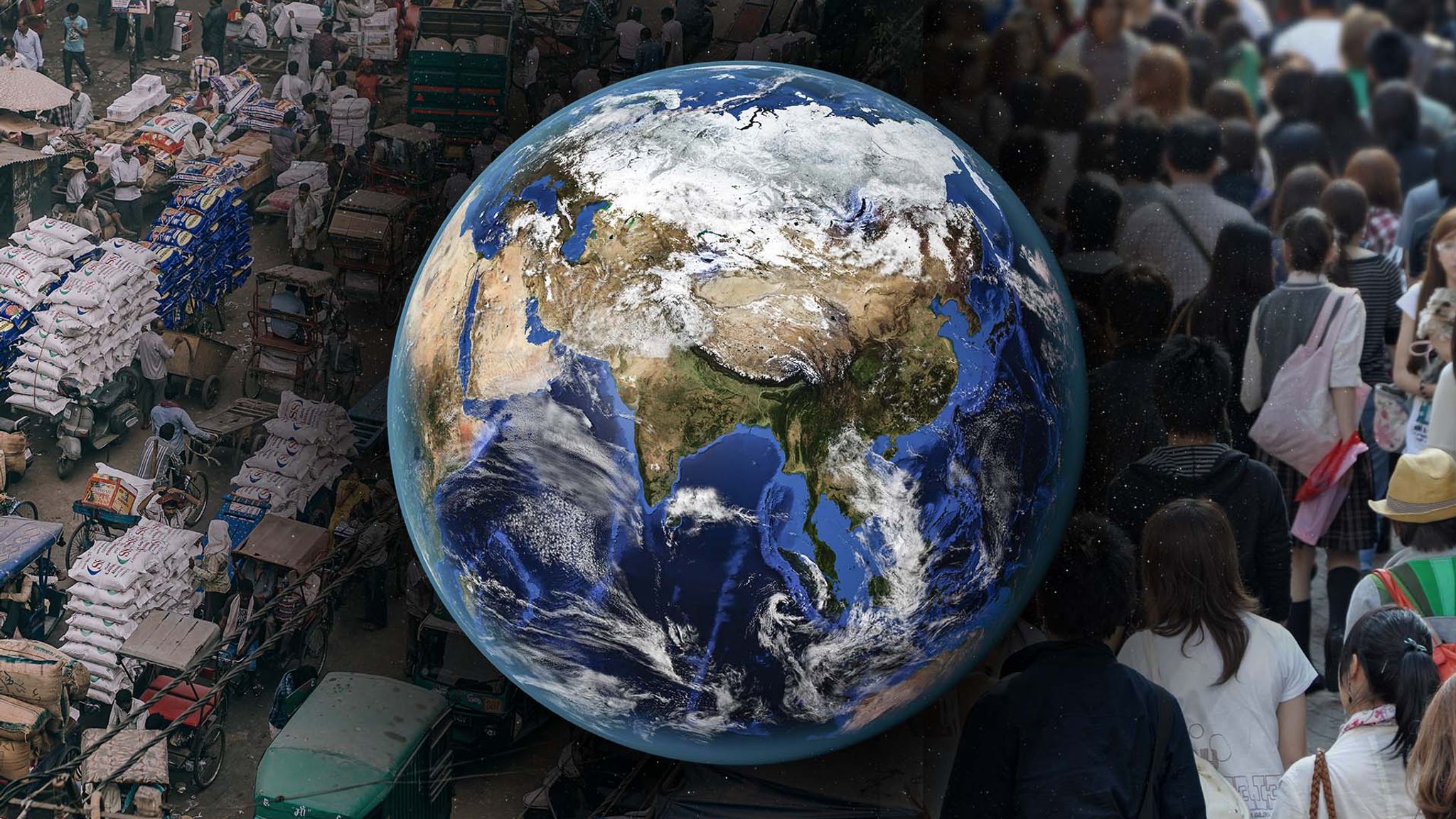
Talk of the Earth reaching its carrying capacity is no longer just a slogan chanted by environmental activists; it has become a reality supported by growing scientific research. With the planet’s population exceeding eight billion, it has become difficult to deny the immense pressure we are placing on our ecosystem, amidst a fundamental question posed by scientists: Are we heading toward a “breaking point”?
“Planetary Boundaries”: The Safe Space Shrinks
To understand the scale of the crisis, scientists have developed the concept of “planetary boundaries,” which serve as a “safe operating space for humanity.” These boundaries encompass climate change, biodiversity loss, freshwater use, and land-based ecosystem changes.
According to researchers from the Climate Change Institute at the National University of Malaysia, exceeding these boundaries means that the Earth will no longer be able to function stably or predictably. Recent studies indicate that we have already crossed several boundaries, particularly in the areas of biodiversity and climate, meaning that human activity is no longer merely impacting the environment but has begun to fundamentally alter its nature.
It’s not a “numbers” crisis, but a “consumption” crisis.
Although population growth is often seen as the primary culprit in environmental stress, scientists are now more cautious about this explanation. A major study from the University of Leeds in the UK revealed that no country in the world today manages to meet human needs without exceeding sustainable limits.
Researcher Daniel O’Neill explains, “Everything we do, from eating dinner to browsing the internet, consumes resources.” This shifts the focus of the discussion from “population growth” to “consumption patterns.” In wealthy countries, individuals consume resources far exceeding what the planet can sustainably bear.
Inequality and a Narrow “Margin of Error”
In a study published in The Lancet Planetary Health, scientists warned that environmental degradation is accelerating due to excessive and unequal consumption. While some consume far more than the Earth can support, others struggle to meet even their most basic needs. Experts emphasize that “humanity’s safety net is shrinking, making the margin of error narrower year after year.”
The Real Challenge: Reinventing Our Ways of Life
Experts agree that the solution lies not only in new technology but also in changing the human mindset. The real challenge is not “how many people” inhabit the Earth, but “how they choose to live on it.”
A sustainable future requires reducing resource-intensive lifestyles and a complete shift towards clean and renewable energy, in addition to the fair and equitable distribution of resources.
Scientific research confirms that our planet has not yet reached the “post-repair” stage, but it is certainly under immense pressure. Our actions in the next few years will determine whether we can heal the planet or take the final step toward the abyss.
