

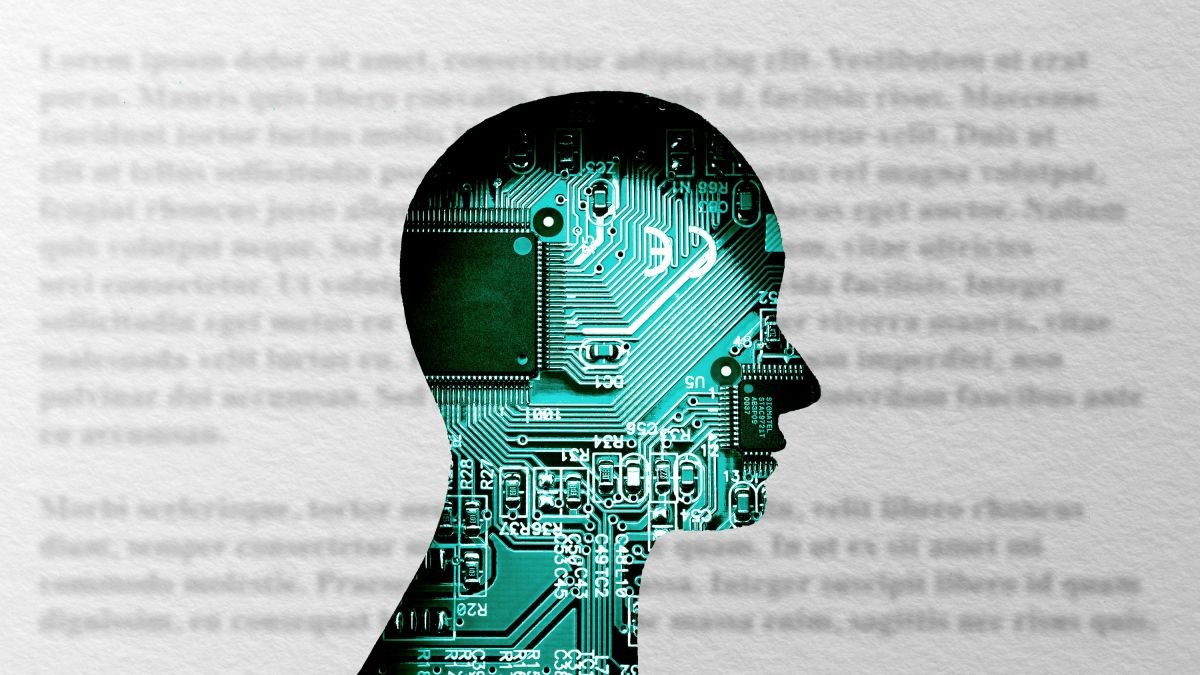
Today, educational and commercial institutions face an existential challenge: distinguishing between human creativity and automated output. While teachers strive to ensure student comprehension and consumers seek to verify the credibility of advertisements, a major dilemma arises: Establishing rules for the use of artificial intelligence is relatively easy, but enforcing them relies on detection technologies that remain demonstrably fragile.
How Detection Tools Work
Automated detection tools often rely on an AI model trained as a “classifier,” similar to spam filters. This model is fed vast sets of human and machine-generated text to learn the subtle differences between them. It then analyzes any new text to assign it a probability score indicating its proximity to machine-generated style.
Another strategy relies on statistical signals. These tools look for a “prediction score” in word sequences. If a text follows a pattern that a particular language model can easily predict with high accuracy, this is a strong indicator that it was produced by that model.
The most accurate solution is “digital watermarks,” subtle patterns embedded in text by AI developers to facilitate later verification. However, this solution requires voluntary cooperation from major technology companies.
Technical Obstacles and Limitations
Despite technological advancements, these tools face challenges that make absolute reliance on them highly risky:
Data Sensitivity: The accuracy of machine learning-based detectors declines as the text deviates from the type of data it was trained on. Since language models (such as ChatGPT) evolve weekly, detection tools are always “time-delayed” behind the technologies they attempt to detect.
Statistical Assumptions Collapse: Statistical tests rely on knowing how a model generates a language, but when these models are closed-source or constantly updated, these tools become unreliable in the real world.
Watermark Dependency: Watermarks depend on vendor cooperation and do not cover text written using open-source models or models that do not adhere to this policy.
An Endless Arms Race
Detecting machine-generated text is part of an escalating technological “arms race.” Once a detection tool is made publicly available, developers or professional users will use it to create “spoofing” techniques that circumvent detection standards. As AI’s ability to mimic human emotions and imperfections in writing improves, the gap between detection tools and their accuracy narrows.
The Hard Reality: The truth that organizations must recognize is that the detection problem is simple to pose but incredibly complex to solve. Organizations cannot rely on these tools as conclusive evidence for imposing sanctions or enforcing policies; their results remain indicative, not definitive.
As society adapts to generative AI, we will undoubtedly see improvements in detection techniques and an evolution in ethical norms, but ultimately, we will have to live with the reality that these tools will never reach perfection, and that the absolute distinction between human and machine text may become virtually impossible.
