

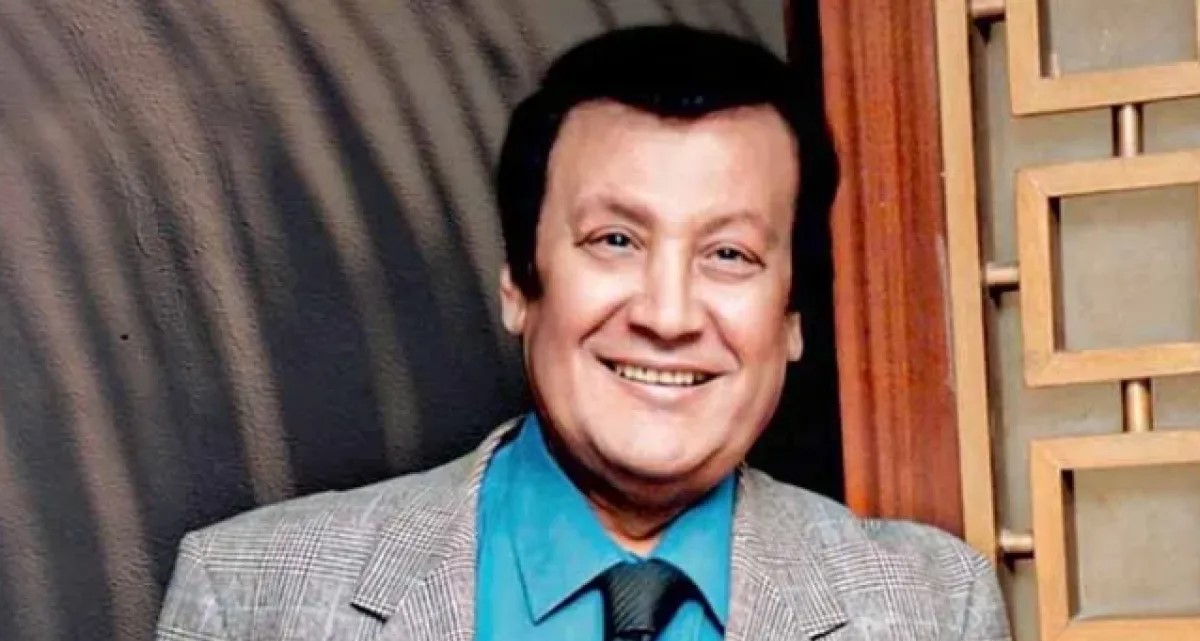
Today marks the 21st anniversary of the passing of the “Knight of Folk Song,” the artist Mohamed Rushdi, who left this world on this day in 2005, leaving behind a musical legacy that was more than just fleeting songs; it was a “constitution” for refined folk music that carved its place in the hearts of the Egyptian and Arab people.
The legend of Rushdi, who was born in 1928 in the city of Desouk in Kafr El Sheikh Governorate, began when he grew up reciting and memorizing the Holy Quran in the village school, which endowed his voice with a rare strength and clarity. He later moved to Cairo to enroll in the Fouad Music Institute, from which his first artistic breakthrough came with the song “Tell the Marriage Registrar,” which set him on the path to stardom.
Rushdi was not just a singer; he was the architect of an artistic project in collaboration with the poet Abdel Rahman El-Abnoudi and the composer Baligh Hamdi. This “formidable trio” redefined the concept of folk song. Adawiya emerged to shake the foundations of the artistic scene in the 1960s, establishing a new language of singing that prompted the legendary singer Abdel Halim Hafez to attempt to emulate this style in his song “Tawba” (Repentance).
Critics believe that Al-Abnoudi “created a new language” specifically for Rushdi, while Baligh Hamdi harnessed his melodic genius to suit Rushdi’s “rough yet smooth” voice in masterpieces such as “Tayir Ya Hawa” (Flying, Oh Wind), “Kaab El Ghazal” (The Gazelle’s Heel), “Aal Ramla” (On the Sand), and “Arabawi.”
The epic “Adham El Sharqawi,” which Rushdi performed for Egyptian radio, marked a major turning point, achieving resounding popular success. This opened doors for him in cinema, leading to six prominent films, including “Harat El Saqayeen” (The Water Carriers’ Alley) and “Ward wa Shawk” (Roses and Thorns). He also made a strong national and religious presence with songs celebrating the October War victories and the television series “Ibn Majah.”
Despite his successes, Rushdi’s journey was not without its challenges. His son, Tarek, revealed in previous statements that his father faced family problems and car accidents that nearly cost him his life and disrupted his career for periods, but his determination proved stronger. Before his passing in May 2005, Rushdi made a powerful comeback with his final album, “Damt Lameen” (For Whom Does It Last?), reaffirming that true talent never fades.
Today, as cafes and homes resonate with songs like “Meti Ashoufak” (When Will I See You) and “Atshan Ya Sabeya” (Thirsty, Girl), Mohamed Rushdi remains present, his voice effortlessly entering hearts, carrying the essence of Egypt’s ports and the pulse of its authentic alleyways.
