
'/%3E%3Cpath%20d='m454%20250-4%204-4-4c-3%203-9%205-9%205l2-5q-9%205-10%203c-1-1%2010-12%2012-26%200-1%203-18-8-13-2%201-4-5%200-7%203-2%2010-1%2011%200q1-2%203-2c2%200%2011%201%2014%206%202%205%202%2014%202%2015q0%2015%208%2027c-1%201-8-2-8-2v3s-7-2-9-4m-12-32c4%2014-9%2031-11%2033%2011%200%2012-10%2015-24l1%201c-2%2011-5%2022-8%2025l7-4%203-22h1l-3%2022%203%203%203-3-1-21h1l1%2021%208%203c-5-8-6-25-6-23h1c2%2012%203%2022%2012%2022-3-3-8-16-7-25q0-12-2-15-6-3-10%202-2%202-5-1c-2-2-1-2-6-4q-7-2-6%205s9-3%2013%205zm7-8q-3%201-1%202%203%200%201-2'/%3E%3C/g%3E%3C/svg%3E)
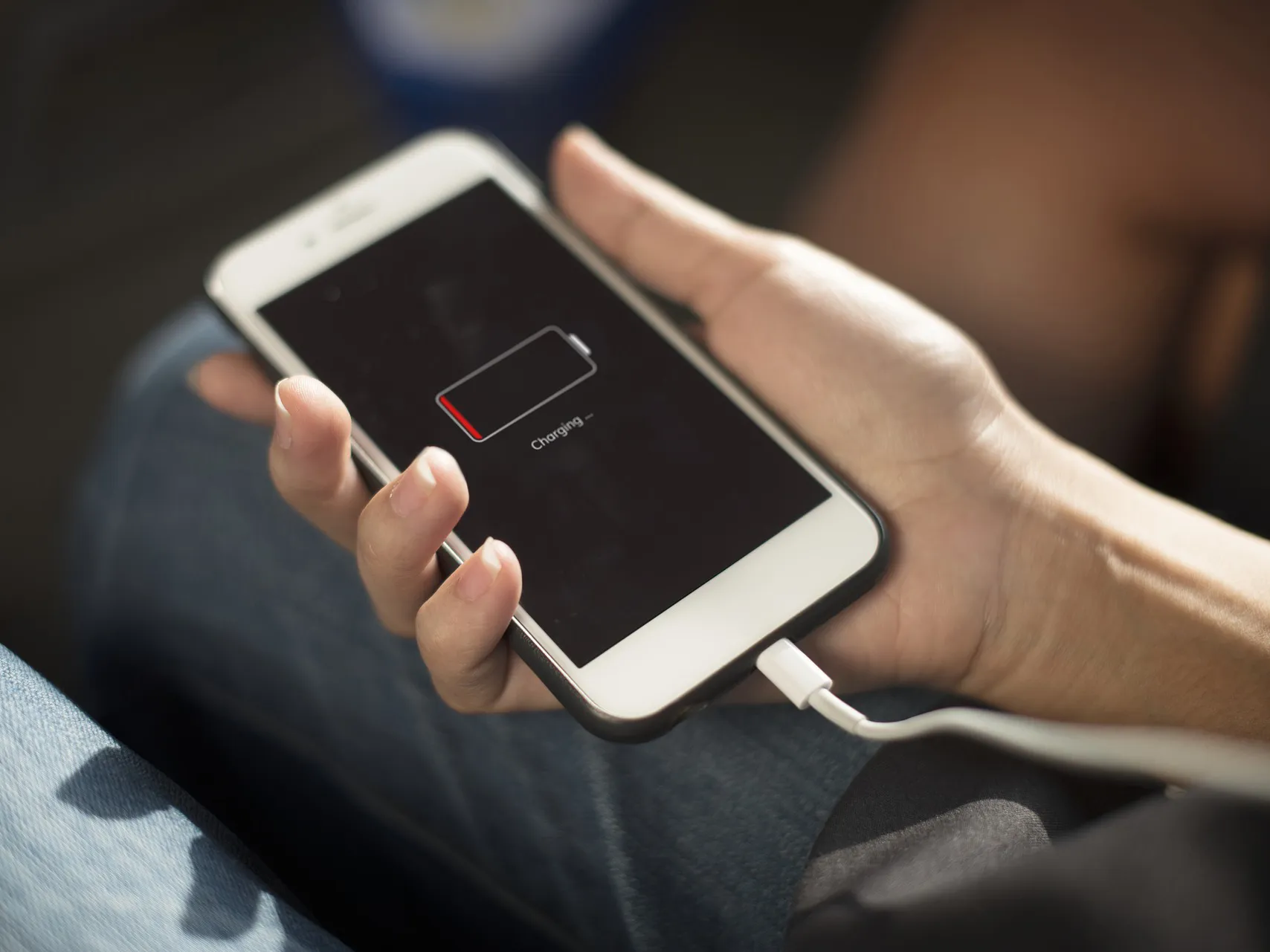
As smartphones evolve into cutting-edge devices integrating professional cameras, GPS navigation, digital wallets, and AI assistants, battery life remains the one feature that often disappoints. The only certainty at the end of each day is that you’ll inevitably need to plug your phone in.
A recent CNET survey revealed that 58% of smartphone owners are frustrated with their battery life. More than half of respondents said that battery dissatisfaction would be their primary motivation for buying a new phone, surpassing the desire for more storage (38%), newer camera features (27%), or a better screen (22%).
This doesn’t mean that today’s phone batteries are bad. In fact, it might require us to reassess our situation. It’s remarkable that current lithium-ion batteries are still able to meet our growing demands, especially as our lives become increasingly digital and screen time reaches unprecedented levels.
Even if you don’t notice it, the battery powering your phone is becoming more efficient and powerful with each new generation of phones. “As our phones evolve, they become more power-hungry,” says Selina Mikołajczak, a consultant and veteran battery industry executive. “Batteries keep improving, but our demands keep pace.”
The Rise of Silicon-Carbon Batteries: Manufacturers are racing to meet consumer expectations for batteries that last more than a day. In China, brands like Honor, Huawei, and Oppo have begun equipping their devices with silicon-carbon batteries, which offer higher energy density and faster charging compared to traditional batteries. In CNET lab tests, nearly half of the phones with the best battery life were found to be using silicon-carbon technology.
In contrast, major players in the US market like Apple, Samsung, and Google have yet to adopt this new technology in their phones, though it seems only a matter of time. Motorola (owned by China’s Lenovo) has equipped its latest Razr phone lineup with silicon-carbon batteries, paving the way for other brands to follow suit.
But rolling out these technologies globally is no easy feat. Paul Brown, director of the Materials Research Laboratory at the University of Illinois, explains that improvements need to be tested on millions of devices to avoid any unexpected malfunctions or widespread safety issues. He adds, “If you want to change the world, you have to be able to produce it in quantities that cover the world.”
At a Samsung press conference for the Galaxy S26 launch last February, the discussion quickly shifted from new features like artificial intelligence and camera and display upgrades to a fundamental question: Why hasn’t Samsung developed its phones with more energy-dense silicon-carbon batteries like the Chinese companies have?
Samsung Executive Vice President Song-Hoon Moon responded that the company is still evaluating this emerging technology to ensure it meets the company’s safety and charging speed standards. He emphasized, “Ultimately, the user experience is paramount. If the technology meets our internal requirements, we might adopt it someday.”
Major companies are extremely cautious to avoid risks, especially after the infamous Galaxy Note 7 crisis in 2016 when several devices’ batteries exploded, leading to a product recall.
How does your phone battery work?
A conventional lithium-ion battery consists of a negative electrode (anode) and a positive electrode (cathode), separated by a thin film that allows lithium ions to pass through a liquid electrolyte. When the phone is in use, the ions move from the anode to the cathode, generating an electric current that powers the phone.
Silicon-carbon batteries aren’t entirely new; they’re an upgrade to lithium-ion batteries. The graphite used in the negative electrode (anode) is replaced with a silicon-carbon composite. Because silicon can hold more lithium than graphite, this design gives the battery a higher energy density (meaning longer lifespan and a smaller size). Carbon is added because silicon expands and contracts significantly during charging, which can quickly damage the battery. In this case, carbon acts as a shock absorber and stabilizes the material. This technology is gaining significant traction. Last year, the OnePlus 15 garnered attention with its massive 7,300 mAh silicon-carbon battery (by comparison, the Galaxy S26 Ultra has a mere 5,000 mAh battery).
Experts point out that Asian consumers are more willing to try new technologies and upgrade their phones quickly, making it an ideal environment for Chinese companies to test new batteries in the market. This contrasts with companies like Apple and Samsung, which prefer a gradual approach to protect their global reputation.
Solid-State Batteries
While silicon-carbon represents the current stage, innovators are looking to solid-state batteries as the next major leap forward. These batteries replace the internal liquid with a solid material, making them safer, less flammable, and offering significantly higher energy density.
However, these batteries face engineering challenges, including the need for extremely high pressure between their layers to function efficiently. This requires additional space, making phones thicker and heavier, in addition to their current high cost. Academics predict that this technology will take 5 to 10 years to become commercially available in smartphones.
Other technologies are also emerging, such as lithium-sulfur batteries and sodium-ion batteries (the latter being cheaper), but each has its drawbacks, such as faster degradation or a bulky size that is unsuitable for mobile phones.
Tips for Extending Battery Life
Until these future technologies become available, you can follow some simple daily habits to maintain your current battery’s efficiency. Limit charging to 80%, as experts recommend against always charging your phone to 100%. The last 20% generates heat and puts significant stress on the cells, accelerating their deterioration. You can activate the “Battery Protection” feature in the settings of iPhones, Samsung phones, and Pixels to limit automatic charging to 80%.
It’s also best to avoid constant fast charging. Super-fast charging generates high heat, negatively impacting battery life. Use standard charging at night, and you can disable fast charging in the battery settings on some phones.
Protect your phone from heat by not leaving it in the car on hot days or in direct sunlight at the beach. Finally, close apps that run in the background and drain power unnecessarily.
