

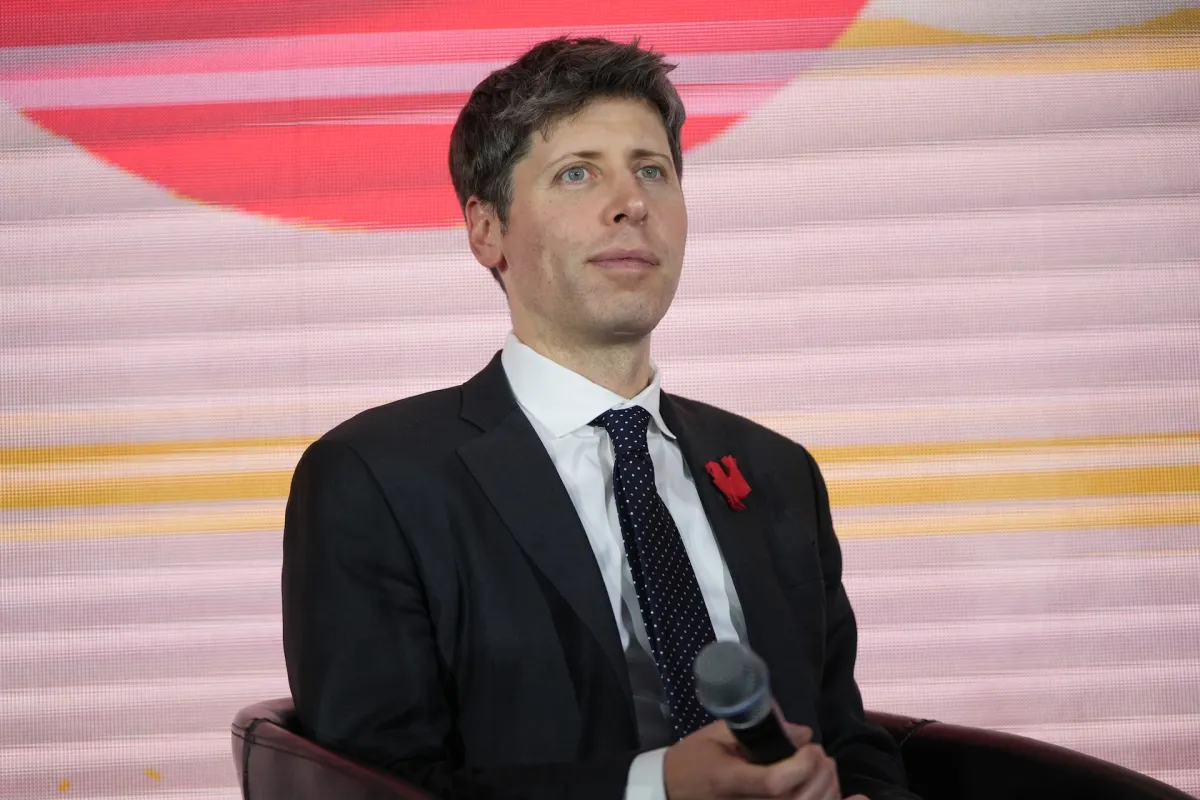
AI and Its Environmental Impact: Insights from OpenAI CEO Sam Altman
OpenAI’s CEO, Sam Altman, recently discussed the environmental implications of artificial intelligence during a notable event organized by The Indian Express. This conversation is particularly timely given the global focus on sustainability and energy practices in tech.
Debunking Water Usage Myths
At the forefront of Altman’s comments was the assertion that concerns surrounding AI’s water consumption are exaggerated. He emphasized that earlier practices in data centers, particularly evaporative cooling methods, contributed to legitimate concerns. However, he dismissed current claims—like the notion that each interaction with ChatGPT requires “17 gallons of water”—as “completely untrue” and disconnected from reality.
The Energy Consumption Question
Despite downplaying water usage fears, Altman acknowledged that energy consumption remains a legitimate concern, particularly as the world increasingly relies on AI technologies. He remarked, “It’s fair to be concerned about the energy consumption—not per query, but in total,” highlighting the need for a transition towards cleaner energy sources. Altman strongly advocated for a swift shift to nuclear, wind, and solar power to meet growing demands.
Lack of Transparency in Energy and Water Usage
One of the challenges facing the tech industry is the lack of legal obligations for companies to disclose their energy and water consumption metrics. This gap has spurred scientists to conduct independent research to better understand AI’s environmental impact. Rising electricity prices have also linked data centers to broader economic trends, raising further questions about sustainability in tech.
Misconceptions About Query Energy Use
In specific terms, the interviewer referenced a statement attributed to Bill Gates concerning the energy consumption equivalent of a single ChatGPT query—suggesting it uses the power of 1.5 iPhone battery charges. Altman disputed this figure, stating, “There’s no way it’s anything close to that much.” He lamented the frustration surrounding discussions of ChatGPT’s energy efficiency, particularly the unfair comparisons of AI energy use during training versus human effort for a single query.
Energy Comparison: AI vs. Human Training
Sam Altman presented an intriguing perspective on energy efficiency. He pointed out that training humans also consumes significant energy over time. “It takes like 20 years of life and all the food you eat during that time before you get smart,” he noted. The evolution of humanity required vast resources, including the collective learning from billions of lives.
In Altman’s view, a more equitable comparison would consider the energy required for a trained AI to respond to a query versus that of a human. He suggested that AI may already be on par with humans in terms of energy efficiency when evaluated this way.
Watch the Full Interview
For those interested, the complete interview with Sam Altman is available here, with a discussion on water and energy concerns commencing at approximately 26:35.
In the ongoing conversation surrounding AI’s environmental footprint, OpenAI’s CEO emphasizes that while there are valid concerns, many misconceptions need to be clarified. As AI technologies continue to evolve, ensuring eco-friendly practices will be crucial for the future.
