

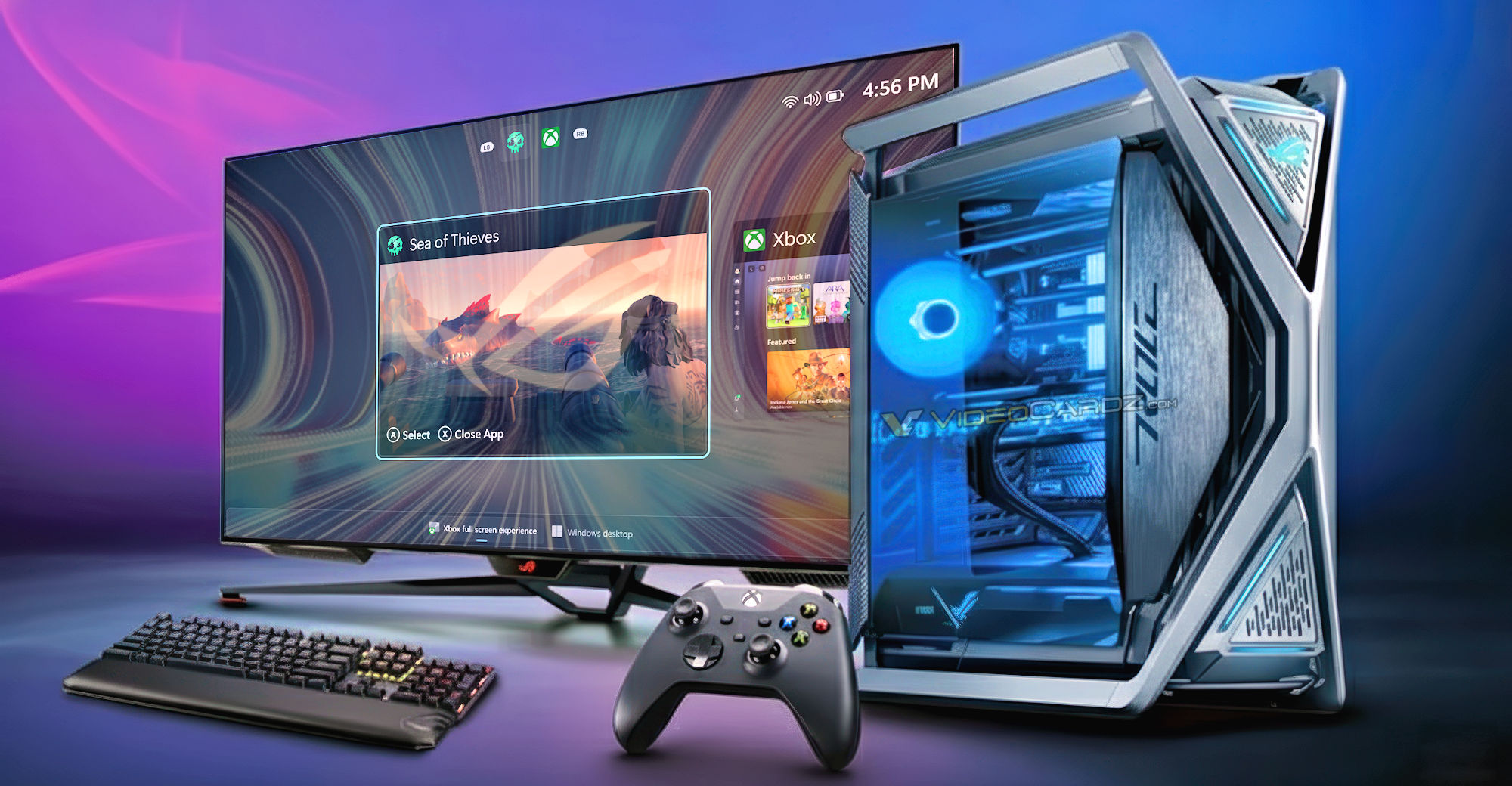
Microsoft has officially announced the launch of Xbox Mode for all Windows 11 PCs and devices, including tablets, laptops, and handhelds. This update aims to transform the traditional Windows interface into one similar to consoles, resulting in a faster and smoother gaming experience.
Following a beta testing period on ROG Ally X consoles and developer editions, Xbox Mode delivers an Xbox-inspired user interface designed to work seamlessly with controllers. The update isn’t just about aesthetics; Microsoft aims to free up system resources to allow games to run more smoothly, although initial tests indicate that the performance improvement is still “slight” so far.
Key features of the new Xbox Mode include a unified library that brings together all installed games from various platforms (Steam, EA App, Ubisoft Connect) and Xbox Game Pass games in one place.
There’s also quick navigation with easy switching between console mode and the traditional Windows 11 desktop, and finally, improved handhelds with better responsiveness and a format optimized for smaller screens and integrated controls. It is widely expected that the next-generation Xbox will essentially be a Windows 11 PC running “Xbox Mode,” effectively merging the gaming console and the PC into a single, unified ecosystem.
Alongside this launch, Microsoft introduced several enhancements, including a preview of Auto SR technology for improved image quality, and an update to the Xbox Series X/S interface that allows users to disable Quick Resume for specific games and customize the operating system’s colors.
Users can access the new mode by going to Settings in Windows 11, selecting Windows Update, and enabling the “Get the latest updates as soon as they are available” option. The update may take a few days to reach all regions worldwide.
Despite some minor software bugs in the current versions, “Xbox Mode” represents an ambitious step by Microsoft to simplify PC gaming and make it more accessible, especially for new users who prefer direct gameplay without the complexities of traditional operating systems.
